
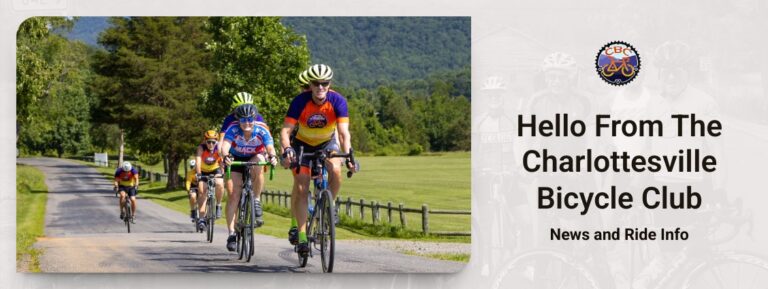
Riding Safely in a Group
● Ride single file, especially on busy roads
● Stay as far to the right as conditions allow —but not so you have to swerve left to avoid hazards
● Hold your line: Ride directly behind the rider in front of you—not more than six inches to left or right
● Maintain constant pedaling: Maintaining a steady pace helps the rider behind you predict your speed. Moderate your pedaling force to control your speed, don’t pedal and then coast. Coasting indicates stopping.
● Signal and announce well in advance before turns
● Look carefully over your shoulder (scan) before signaling and pulling out into the lane. Don’t move if cars are in the lane or overtaking rapidly—they have the right of way
● Before you pass another rider, make sure the lane to your left is clear and announce you are passing on the left
● When you move out to pass, have a plan for how you are going to re‐enter the line of riders
● Come to a full stop at red lights—ALWAYS
● Come to a stop at stop signs. Take turns with cars at four‐way stops
● Regroup if the group gets separated at an intersection. No one should be penalized for stopping. Keeping the group together is safe riding and club culture
● Move well off the road if the group stops call out “stopping” first and move off the road
● We signal for other riders and vehicles

We Communicate Loudly
● “On your left” Whenever we are passing. If our fellow rider doesn’t know we are there, they might move to the left unexpectedly
● “Slowing” So the person behind us will know to slow down too and not run into us
● “Stopping” Loudly and clearly
● “Car back” Those in the back of line say it first. Everyone else passes it up the line so all are aware
● “Car up” When there is a car in the oncoming lane on a narrow road, or a stopped car in our lane
● “Walker up” So fellow riders know to move out and give a pedestrian or jogger some space
● “Hole” “Bump” “Branch” “Debris” To warn riders behind us of a hazard
What We DON’T Do
● Wear headphones (because we won’t be able to hear when fellow riders communicate with us)
● Pass on the right (because we cut off someone’s safe lane, and they don’t expect it)
● Pass on a downhill (because riders who are descending may move laterally without warning to avoid a hazard, and they won’t be able to signal in advance)
● Let our front wheel overlap (laterally) with the wheel in front of us (because if they move to the side, we’ll go down)